





 ES
ES  EN
EN  FR
FR  PT
PT  RU
RU  FA
FA 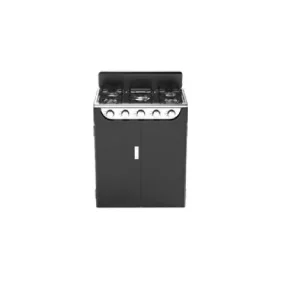
Resumen
The decision between Liquefied Petroleum Gas (LPG) and induction cooktops represents a significant choice for the modern household, impacting everything from daily cooking routines to long-term financial and environmental outcomes. This analysis provides a detailed comparative examination of these two dominant cooking technologies. It evaluates them across five principal domains: energy efficiency and environmental impact, cooking performance and control, upfront and long-term costs, kitchen safety, and overall usability. LPG, a traditional method, relies on the combustion of gas, offering familiarity and independence from the electrical grid. Induction technology, conversely, utilizes electromagnetic fields to heat cookware directly, promising superior efficiency and precision. By synthesizing data from appliance testing, governmental energy reports, and studies on indoor air quality, this document offers an objective framework. The examination reveals that while LPG holds advantages in initial affordability and off-grid reliability, induction cooking generally proves superior in energy efficiency, speed, safety, and precise temperature modulation, marking it as a forward-looking choice for many kitchens.
Principales conclusiones
- Induction is up to 90% energy-efficient, transferring more heat directly to the pot.
- LPG provides instant visual feedback with its flame but is only 40-55% efficient.
- Induction cooktops offer faster boiling times and more precise temperature control.
- The flat, smooth surface of an induction hob makes it significantly easier to clean.
- Evaluate your priorities to determine which is better, LPG or induction, for your home.
- Induction cooking eliminates combustion byproducts, improving indoor air quality.
- LPG cookers function during power outages, a key benefit for certain areas.
Índice
- A Foundational Look at LPG and Induction Cooking
- Factor 1: Energy Efficiency and Environmental Impact
- Factor 2: Cooking Performance and Control
- Factor 3: Upfront and Long-Term Costs
- Factor 4: Safety in the Kitchen
- Factor 5: Usability and Kitchen Integration
- Making the Choice: A Synthesis for Your Household
- Preguntas más frecuentes (FAQ)
- Conclusión
- Referencias
A Foundational Look at LPG and Induction Cooking
Before we can meaningfully compare two distinct methods of generating heat for cooking, it is necessary to understand the fundamental principles that govern each. They are not simply different versions of the same thing; they are expressions of entirely different physical processes. One is a story of combustion, a chemical reaction as old as humanity’s first controlled fire. The other is a tale of electromagnetism, a phenomenon that has been harnessed only in the more recent chapters of our technological history. Grasping these differences is the first step in making an informed decision for your kitchen.
What is LPG Cooking? The Mechanics of Flame
Liquefied Petroleum Gas, or LPG, is a fuel source familiar to millions. It is typically a mixture of propane and butane gases, stored under pressure in a liquid state within a canister or tank. When you turn the knob on an LPG stove, a valve releases the pressure, allowing the liquid to revert to its gaseous form. This gas travels through a pipe to the burner. There, it mixes with oxygen from the surrounding air. An igniter, either a spark or a pilot light, provides the initial activation energy to start a chemical reaction: combustion.
The flame you see is the visible evidence of this rapid, exothermic reaction. The gas molecules are breaking apart and reforming, releasing stored chemical energy as heat and light. This heat is then transferred to your cooking vessel in three ways: through direct contact with the flame (conduction), through the movement of hot air rising from the flame (convection), and through infrared energy radiated by the flame (radiation). This method is intuitive. A larger flame means more heat; a smaller flame means less. The technology is robust, dependable, and has been refined over decades.
What is Induction Cooking? The Science of Magnetism
Induction cooking operates on a principle that feels almost magical in its execution: heating the pan without first heating the surface it rests upon. Beneath the smooth, ceramic-glass surface of an induction cooktop lies a coil of copper wire. When you turn the cooktop on, an alternating electric current flows through this coil, generating a rapidly oscillating magnetic field.
This magnetic field itself does not produce heat. However, when you place a cooking pot made of a ferromagnetic material (a material that can be magnetized, like iron or certain types of stainless steel) onto the surface, the magnetic field induces an electrical current within the base of the pot. This is known as an “eddy current.” Due to the natural electrical resistance of the metal, these swirling currents generate significant heat directly in the pot itself. The pan becomes the source of the heat, not the cooktop. The ceramic surface gets warm only from contact with the hot pan, not from an internal heating element. This direct, targeted heating is what makes the technology so distinct.
At-a-Glance Comparison: LPG vs. Induction
To provide a clear initial overview, consider the following table which summarizes the core attributes of each technology.
| Característica | LPG Cooktop | Induction Cooktop |
|---|---|---|
| Heating Method | Combustion of gas (open flame) | Electromagnetic induction |
| Energy Transfer | Indirect: Flame heats air and pot | Direct: Magnetic field heats pot |
| Heat Response | Instant visual change, slight thermal lag | Instant and precise digital change |
| Cookware | Works with most types of cookware | Requires ferromagnetic cookware |
| Cleaning | Complex (grates, burners, spills) | Simple (flat, smooth glass surface) |
| Off-Grid Use | Yes, independent of electricity | No, requires stable power supply |
Factor 1: Energy Efficiency and Environmental Impact
The way we cook has consequences that extend beyond the kitchen walls. The choice between LPG and induction is also a choice about energy consumption and environmental responsibility. Efficiency, in this context, is not an abstract number; it translates directly into the amount of energy you pay for that actually cooks your food versus the amount that is wasted as excess heat into your kitchen.
Measuring Efficiency: Where Does the Energy Go?
Energy efficiency in cooking is a measure of how much of the source energy (from the gas or electricity) is successfully transferred to the food in the pot. The U.S. Department of Energy provides a clear benchmark for this comparison.
With an LPG or natural gas cooktop, the burning flame is an inefficient method of heat transfer. A significant portion of the heat, often more than half, warms the air around the pot, the metal grates, and the body of the cooktop itself. It does not contribute to cooking your meal. This results in an energy efficiency of around 40-55% (U.S. Department of Energy, 2021). For every dollar you spend on gas, about 40 to 55 cents are doing the work of cooking, while the rest is simply making your kitchen warmer.
Induction, by its very nature, is vastly more efficient. Because the magnetic field creates heat directly within the cookware, very little energy is wasted. The heat is generated exactly where it is needed. This leads to an energy efficiency of approximately 85-90%. This means 85 to 90 cents of every dollar spent on electricity for induction cooking is transferred to your food. This dramatic difference in efficiency is a central argument in the LPG vs. induction debate.
The Environmental Footprint of LPG
LPG is a fossil fuel. Its combustion inherently releases carbon dioxide (CO2), a primary greenhouse gas, into the atmosphere. While it is a cleaner-burning fossil fuel compared to coal or oil, its environmental impact is not negligible. The entire lifecycle, from extraction and refining to transportation and final use, contributes to its carbon footprint.
Furthermore, the combustion process in your kitchen releases other byproducts, including nitrogen oxides (NOx) and fine particulate matter. These pollutants can affect indoor air quality, a topic we will explore further in the safety section. The reliance on a finite resource also raises long-term sustainability questions.
The Greener Profile of Induction
Induction cooking’s environmental advantage is twofold. First, its high efficiency means it consumes significantly less total energy to perform the same cooking task. Less energy consumption translates to a smaller environmental impact, regardless of how the electricity is generated.
Second, the source of the electricity matters. An induction cooktop running on electricity generated from burning coal still has a carbon footprint. However, as power grids increasingly integrate renewable sources like solar, wind, and hydropower, the environmental profile of induction cooking improves. A homeowner with solar panels could, in theory, cook with zero emissions. This potential for decarbonization is something LPG, as a combustion-based fuel, cannot offer. Choosing induction is, in many ways, an investment in a potentially cleaner energy future.
Factor 2: Cooking Performance and Control
For many, the ultimate test of a cooktop is not its efficiency or cost, but how it feels to use. Does it respond quickly? Can it hold a delicate simmer? Can it deliver the searing heat needed for a perfect steak? Here, the experiential differences between flame and magnetism become profoundly apparent.
Speed and Heat Response: A Race to the Boil
One of the most frequently celebrated attributes of induction cooking is its sheer speed. Because energy is transferred directly and efficiently to the pot, tasks like boiling water happen remarkably fast, often twice as fast as with gas. Think about the time saved on a daily basis, from boiling water for pasta to quickly heating a pan for a stir-fry.
This speed is a function of both power and efficiency. While a high-BTU gas burner is powerful, much of its power is wasted. An induction element channels its power with surgical precision. The response is also instantaneous. When you increase or decrease the power level on an induction cooktop, the change in the magnetic field is immediate, and the effect on the cookware is felt in seconds.
LPG offers a satisfyingly immediate visual response—turn the knob and the flame grows. However, there is a degree of thermal inertia. The pot and the grates take time to absorb the increased heat, and when you turn the flame down, they take time to cool. The response is fast, but not as electronically precise as induction.
Precision and Temperature Consistency
This is where induction truly distinguishes itself, particularly for more advanced cooking techniques. Most induction cooktops have a wide range of discrete power levels, often from 1 to 10, or even more. This digital control allows you to select and return to an exact level of heat with perfect repeatability. If you find that power level ‘3’ is perfect for a gentle simmer, it will be the exact same gentle simmer every single time.
Some advanced induction models even offer temperature-specific settings, allowing you to set the cooktop to hold the pan at, for example, 120°C. This is invaluable for tasks like confectionery, delicate sauces, or holding food at a precise temperature without scorching.
Achieving this level of precision with LPG is a matter of skill and practice. It requires a trained eye to judge the flame and a feel for how a particular burner and pot behave. While a seasoned chef can achieve great results, it lacks the foolproof repeatability of a digital system. Holding a very low, consistent simmer on some powerful gas burners can be challenging, as the flame can be prone to extinguishing.
Cookware Compatibility: A Decisive Factor
The singular, most significant limitation of induction cooking is its cookware requirement. For the process to work, pots and pans must be made of a ferromagnetic material. This includes cast iron, enameled cast iron, and many types of stainless steel. It excludes materials like aluminum, copper, and glass.
How can you tell if your current cookware is compatible? The test is simple: if a magnet sticks firmly to the bottom of the pot, it will work on an an induction cooktop. For many, a switch to induction may necessitate investing in a new set of pots and pans, which should be factored into the overall cost. Reputable providers of home appliances, such as proveedor de electrodomésticos, offer a wide range of products to suit various cooking technologies.
LPG, in contrast, is the universal acceptor. It will heat almost any type of cookware you place over its flame, from a classic copper saucepan to a round-bottomed wok or a clay pot. This flexibility is a significant advantage for those with a cherished and diverse collection of cookware.
Factor 3: Upfront and Long-Term Costs
The financial implications of choosing a cooktop are a primary concern for any household. The decision involves not just the price tag on the appliance itself, but also the ongoing costs of fuel or electricity, potential installation expenses, and the lifespan of the equipment. A comprehensive cost analysis requires looking at the total cost of ownership over several years.
The Initial Investment: Appliance and Installation
Generally, LPG cooktops have a lower upfront cost than their induction counterparts. The technology is simpler and has been mass-produced for longer. You can find a wide variety of reliable Cocinas de GLP at very accessible price points. Installation is also often straightforward, especially if gas lines are already in place.
Induction cooktops, being a more advanced technology, typically carry a higher initial purchase price (This Old House, 2025). The cost has been decreasing as the technology becomes more widespread, but they still represent a larger upfront investment. Installation can also be more complex. An induction range requires a dedicated high-amperage 240-volt circuit, which may not be present in all older kitchens. If an electrician is needed to run a new line, this can add several hundred dollars to the installation cost.
Running Costs: A Tale of Two Utilities
This is where induction’s high efficiency begins to pay dividends. While the per-unit cost of electricity is often higher than the per-unit cost of LPG, induction uses so much less energy that its running costs are frequently lower.
Let’s imagine a simple scenario. To deliver 1 kWh of useful cooking energy to your food, an LPG stove (at 40% efficiency) would need to consume 2.5 kWh worth of gas. An induction cooktop (at 85% efficiency) would only need to consume about 1.18 kWh of electricity. Even if electricity is more expensive per kWh, the drastic reduction in consumption can lead to savings on your monthly utility bills. The exact calculation depends on local utility rates, but the underlying efficiency advantage of induction is constant.
The table below offers a hypothetical cost comparison, illustrating how efficiency impacts long-term expenses. The costs are illustrative and will vary based on your location and usage.
| Cost Factor | LPG Cooktop | Induction Cooktop |
|---|---|---|
| Appliance Cost | $300 – $1,000 | $800 – $2,500+ |
| Installation Cost | $100 – $300 (if no new gas line) | $200 – $600+ (may require new circuit) |
| Cookware Cost | $0 (if existing cookware is used) | $150 – $500+ (if new set is needed) |
| Eficacia | ~40% | ~85% |
| Est. Annual Fuel Cost | $60 – $120 | $40 – $80 |
| Est. 10-Year Total Cost | $1,000 – $2,500 | $1,190 – $3,900 |
As the table shows, while the initial outlay for induction can be higher, the lower running costs can help to offset this over the appliance’s lifetime.
Maintenance and Lifespan
Both LPG and induction cooktops are generally reliable appliances. LPG stoves have relatively simple mechanical parts (valves, igniters) that are time-tested and can be repaired. The main maintenance involves regular, thorough cleaning of the burners and grates to prevent clogging and ensure efficient combustion.
Induction cooktops have no moving parts in their heating system, which reduces the chances of mechanical failure. The primary components are the solid-state electronics and the copper coils. The main risk is damage to the ceramic-glass top from dropping a heavy object on it, which can be an expensive repair. The lifespan of both appliance types is similar, typically in the range of 10-15 years, depending on the quality of the unit and how it is maintained (Consumer Reports, 2025).
Factor 4: Safety in the Kitchen
The kitchen is a place of nourishment, but it also contains inherent risks. The choice of a cooktop is one of the most significant safety decisions a household can make. The contrast between LPG and induction in this domain is stark, revolving around the presence of an open flame and the byproducts of combustion.
LPG Safety: Managing Open Flames and Gas Leaks
The most obvious safety concern with an LPG cooktop is the open flame. This presents a fire hazard if flammable materials like paper towels, curtains, or loose clothing come too close. It also means that the burners and grates become extremely hot and remain so for some time after being turned off, posing a burn risk, especially for children.
A more insidious risk is that of a gas leak. While modern LPG stoves have safety features, the possibility of a leak from the tank, the connection, or the appliance itself always exists. An accumulation of LPG in an enclosed space can create an explosion hazard. The gas is odorized to make leaks detectable, but this is a risk that is entirely absent with induction.
Induction Safety: A Cooler, Safer Surface
Induction cooking eliminates these risks. There is no open flame, so the risk of igniting nearby objects is gone. The cooktop surface itself does not become the primary source of heat. It only gets hot from contact with the heated pan. When the pan is removed, the surface cools down quickly. Many models have heat indicator lights to warn when the surface is still warm, but the burn risk is dramatically reduced compared to gas or traditional electric-radiant cooktops.
Furthermore, most induction cooktops have built-in safety features. They will not turn on unless a compatible pan is placed on the element. If a pot boils dry, the cooktop can sense the anomalous temperature spike and shut itself off, preventing damage to the pan and reducing fire risk. If you lift the pan off the element, the magnetic field generation stops instantly. These intelligent features create a much more forgiving and safer cooking environment.
Indoor Air Quality Considerations
Recent research has brought increasing attention to the impact of gas cooking on indoor air quality. The combustion of LPG, even in a perfectly functioning stove, releases pollutants directly into your kitchen air. These include nitrogen dioxide (NO2), carbon monoxide (CO), and fine particulate matter (PM2.5). Studies, such as those summarized by organizations like the Rocky Mountain Institute, have linked these pollutants to respiratory issues, particularly in vulnerable populations like children and the elderly (Seals et al., 2020).
Proper ventilation, such as using a high-quality, externally-venting range hood, can mitigate this risk significantly. However, many kitchens lack adequate ventilation, allowing these pollutants to build up.
Induction cooking, because it involves no combustion, produces none of these harmful byproducts. The only emissions are the steam and vaporized oils from the food itself, which are far less harmful. For households concerned with creating the healthiest possible indoor environment, this is a powerful argument in favor of induction.
Factor 5: Usability and Kitchen Integration
Beyond performance and safety, the day-to-day experience of living with a cooktop matters. How easy is it to clean? Does it require you to change your habits? How does it fit into the broader context of your home and lifestyle?
Cleaning and Maintenance: The Daily Reality
This is perhaps one of the most celebrated practical benefits of induction. The cooking surface is a single, flat sheet of ceramic glass. Since the surface itself doesn’t get intensely hot, spills and splatters don’t burn on. A simple wipe with a damp cloth is usually all that is needed to clean it. There are no grates to scrub, no burner caps to remove, and no crevices for food to fall into. This can save a considerable amount of time and effort in daily kitchen cleanup.
Cleaning an LPG cooktop is a more involved chore. It requires removing heavy iron or steel grates, cleaning the burner caps, and scrubbing the cooktop surface, which often has baked-on spills. It is a functional design, but it is not optimized for ease of cleaning.
Adapting Your Cooking Style
For those accustomed to cooking with gas, the visual feedback of the flame is a learned language. Adjusting to the digital, numbered interface of an induction cooktop can take a short period of adaptation. Some cooks miss the “feel” of cooking over a flame. Techniques that involve the flame itself, like charring a pepper directly on the grate, are not possible with induction.
However, the precision of induction opens up new possibilities. The ability to hold exact low temperatures makes it easier to tackle delicate tasks that might be stressful on a gas stove. The learning curve is generally short, and many cooks find they quickly come to appreciate the control and consistency it offers.
Power Grid Reliability and Off-Grid Living
A critical, practical difference emerges when considering power outages. An LPG cooktop is entirely independent of the electrical grid (unless it has an electric igniter, which can be bypassed with a match). In areas with frequent power outages or for those living in an off-grid or remote setting, LPG provides a level of resilience and self-sufficiency that induction cannot match.
An induction cooktop is entirely dependent on a stable supply of electricity. If the power goes out, your ability to cook is gone. This is a non-negotiable consideration for many potential buyers. You must assess the reliability of your local power grid and your personal need for cooking capabilities during an outage when making your decision.
Making the Choice: A Synthesis for Your Household
There is no single, universal answer to the question of which is better, LPG or induction. The optimal choice is not inherent in the technologies themselves, but in the intersection of their attributes with your personal values, circumstances, and cooking habits. The process of deciding is an exercise in self-assessment.
Consider your priorities:
- If maximum safety, especially with children in the home, ease of cleaningy indoor air quality are your highest priorities, the case for induction is overwhelmingly strong. Its flameless, low-emission operation creates a healthier and more secure kitchen environment.
- If your primary concerns are a low initial investment and the absolute necessity of cooking during a power outage, then a traditional LPG cooktop remains a compelling and logical choice. Its independence from the grid is an advantage that induction cannot replicate.
- If you are a passionate cook who values speed, precision, and repeatable results, induction offers a level of control that is difficult to achieve with gas. The ability to dial in an exact heat setting and have it respond instantly is a game-changer for many culinary tasks.
- If you have a cherished collection of non-magnetic cookware (like copper or aluminum) or enjoy cooking techniques that use a round-bottom wok directly on the flame, LPG provides the universal compatibility and flexibility you need.
The decision is a balance. It weighs the upfront cost of induction against its long-term efficiency and safety benefits. It pits the familiar flexibility of gas against the clean, precise power of magnetism. By carefully considering these five factors, you can move beyond a simple “which is better” and arrive at “which is better for me.”
Preguntas más frecuentes (FAQ)
1. Do I really need special cookware for an induction cooktop? Yes, this is a non-negotiable requirement. Cookware must be “ferromagnetic,” meaning a magnet will stick to the bottom. Cast iron, enameled cast iron, and most stainless steel pans work. Aluminum, copper, and glass pans will not.
2. Is induction cooking really faster than LPG? Yes. Due to its high energy efficiency (85-90%), induction transfers more energy to the pot in less time. Most tests show induction can boil water up to 50% faster than even high-powered gas burners.
3. What happens to an induction cooktop if the power goes out? An induction cooktop is an electrical appliance and will not function during a power outage. An LPG cooktop will continue to work, which is a key advantage in areas with unreliable power grids.
4. Is the magnetic field from an induction cooktop dangerous? The magnetic field generated is of a low frequency and strength, and it dissipates within an inch or two of the surface. For the vast majority of people, it is perfectly safe. Individuals with pacemakers are sometimes advised to consult their doctor, though modern pacemakers are generally shielded against such interference.
5. Which is cheaper to run, induction or LPG? While this depends on local utility prices, induction is often cheaper to run in the long term. Its high energy efficiency means it uses significantly less total energy to do the same amount of cooking, which can offset a higher per-unit cost of electricity compared to gas.
6. Can I use a round-bottom wok on an induction cooktop? Traditional round-bottom woks do not work well on a flat induction surface because there is not enough contact area. However, you can buy flat-bottomed, induction-compatible woks, or use a special “wok ring” adapter on some models.
7. Is induction harder to control than gas? There is a small learning curve. Instead of a visual flame, you use digital power levels. However, most users find that once they are accustomed to it, induction offers far more precise and repeatable control, especially at very low and very high temperatures.
Conclusión
The journey through the competing virtues of LPG and induction cooking reveals a choice that is deeply personal, reflecting a household’s priorities regarding technology, safety, cost, and culinary style. LPG offers the comfort of tradition, a robust and universally compatible system that provides security against power failures and requires a lower initial financial barrier. It is a proven, reliable workhorse. Induction, on the other hand, represents a step into a more efficient and controlled future. It delivers unparalleled speed, precision, and safety, all while promoting better indoor air quality and offering a path toward a more environmentally sustainable kitchen. There is no single victor in this contest. The “better” cooktop is the one that best aligns with your life, your budget, and your vision for the heart of your home.
Referencias
Consumer Reports. (2025). Best kitchen appliances of 2025. consumerreports.org
Electrolux. (2025). Stoves and hobs buying guide.
Miele. (2025). Face any cooking challenge.
Seals, B., Krasner, S., & Egan, C. (2020). Gas stoves: Health and air quality impacts and solutions. Rocky Mountain Institute.
This Old House. (2025). Major appliance buying guide: Features, types, and FAQ (2025).
U.S. Department of Energy. (2021). Consumer guide to kitchen appliances fact sheet. Energy Saver.