





 PT
PT  EN
EN  FR
FR  ES
ES  RU
RU  FA
FA Choosing between steam irons and regular irons is not a simple product comparison, but a strategic product portfolio decision that appliance distributors and brand owners need to make. From a business perspective, these two products are not substitutes, but complements, each meeting different consumer needs, price ranges, and usage scenarios. For B2B buyers, a more profitable strategy is usually to rationally distribute both categories within a clear product matrix, rather than betting on a single product. This article will systematically analyze aspects such as technical performance, market demand, cost structure, and innovation trends to help decision-makers achieve a more scientific investment balance.
Core Technological Differences Influencing Procurement Decisions
Understanding the technological logic behind these two product types is crucial before discussing profit margins or channel strategies.
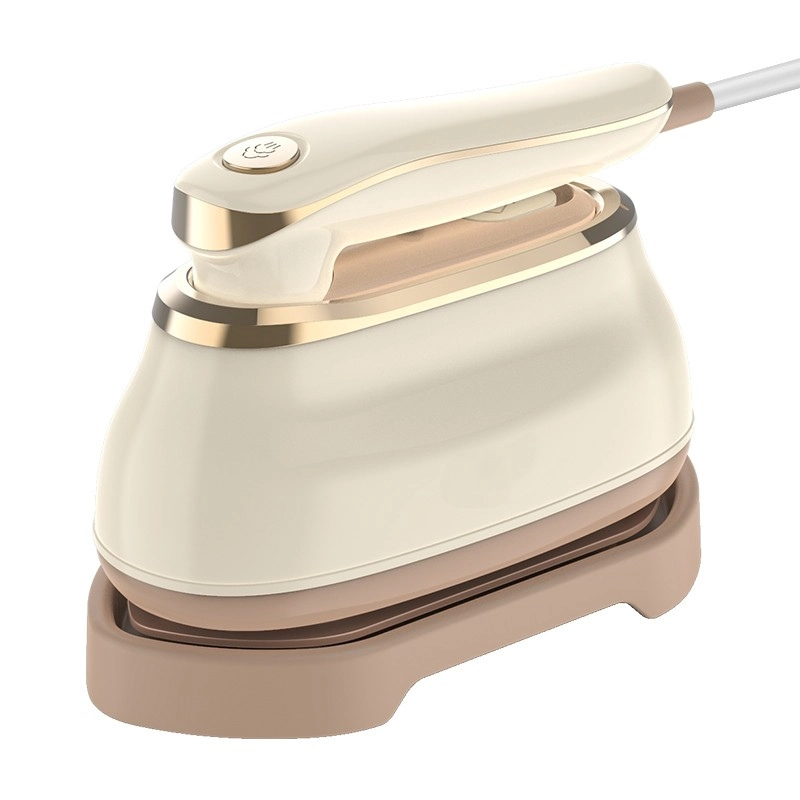
The core structure of a steam iron includes a heated soleplate, a temperature control system, and a steam generation module. It uses the soleplate to directly contact the fabric, combining pressure and heat to flatten the fibers, and then uses steam to soften the fiber structure, thus achieving a shaping effect. This design is ideal for structured garments such as business shirts, suit trousers, and uniforms that require well-defined pleats. Commercial-grade units, such as a ferro a vapor profissional, are designed for consistent steam pressure, anti-calc systems, and long operational cycles.The temperature control system typically supports multiple settings and is safe for cotton, linen, wool, and various blended fabrics. Commercial models also feature anti-scaling systems, powerful steam jet modes, and longer continuous operation capabilities.
Steam irons, on the other hand, focus on steam diffusion, using continuous high-temperature steam in a vertical position to relax fabric fibers. They don’t rely on physical pressure but rather on steam penetration to restore fibers to their natural state, making them gentler and especially suitable for silk, chiffon, lace, embroidered, or highly decorative garments. Since no ironing board is needed, they are more convenient to use.
From a distributor’s perspective, this technological difference directly determines the target customer group. Traditional irons are more geared towards the basic household market, while steam irons are more geared towards urban consumers and commercial settings with higher demands for efficiency and convenience.
Market Demand and Segmentation Trends
The demand structure for garment care appliances varies significantly across different regions.
In emerging markets, due to consumers’ high price sensitivity, ordinary irons still dominate. An iron that can both remove wrinkles and press creases offers broad functionality and high cost-effectiveness, thus becoming one of the basic household appliances.
In first-tier cities or areas with developed hotel industries, the growth of steam irons is more pronounced. Hotels, guesthouses, and clothing retailers often require the rapid processing of large volumes of clothing while minimizing operational complexity and space requirements. Steam irons, which eliminate the need for an ironing board, significantly improve work efficiency.
Online search trends show a continuous increase in keyword searches related to “steam iron vs. regular iron,” reflecting consumers’ growing emphasis on functional differences and suitability for various usage scenarios before purchasing. For distributors, providing professional comparisons not only educates the market but also enhances the brand’s professional image.
In terms of channel layout, large chain supermarkets are better suited to promoting affordable iron products, while boutique appliance stores, high-end e-commerce channels, or hotel supply chains are better suited to developing steam iron product lines.
A diversified product structure helps mitigate risks associated with regional and seasonal fluctuations.
Performance Metrics That Matter in Commercial Procurement
When evaluating garment steamer vs iron from a B2B standpoint, performance specifications should be analyzed carefully.
Key technical indicators include:
- Heating time
- Steam output consistency
- Water tank capacity
- Soleplate material or boiler design
- Energy efficiency
- Durability under continuous use
Irons typically heat faster and provide precise temperature control. Steamers may take slightly longer to reach operating temperature but offer continuous steam flow for rapid garment refreshment.
Table 1: Commercial Evaluation of Garment Steamer vs Iron
| Criteria | Ferro a vapor | Vaporizador de roupa |
|---|---|---|
| Crease Precision | Elevado | Moderate |
| Fabric Safety | High with correct setting | Very High |
| Startup Speed | Fast | Moderate |
| Space Requirement | Requires board | Vertical operation |
| Hospitality Suitability | Moderate | Elevado |
| Retail Mass Market | Elevado | Growing |
For decision-makers, this table highlights operational strengths rather than consumer preferences alone.
If you are evaluating sourcing models or OEM partnerships for garment care appliances, connect with our team to explore tailored solutions: Contact US
Cost Structure and Profit Margin Analysis
In actual operation, profitability is often more decisive than technological advantages.
Regular steam irons have a relatively mature structure and highly standardized components, thus controlling production costs. However, due to intense market competition, especially in the entry-level price range, profit margins may be compressed.
Steam irons, especially upright models, generally have a higher unit price and stronger pricing power. Their positioning as “high-end,” “convenient,” and “upgraded home appliances” allows them to maintain more stable profit margins in mid-to-high-end channels.
Logistics costs are also significant. Upright steam irons are larger, requiring more bulky packaging, directly impacting container loading efficiency. For distributors importing in large quantities, proper volume planning directly affects overall gross profit margins.
After-sales risks are also a crucial variable. In hard water regions, steam irons are more prone to limescale buildup, making boiler quality and anti-scaling systems particularly critical. For regular irons, attention should be paid to the durability of the soleplate coating and the stability of the temperature control system.
Building a balanced product portfolio can effectively mitigate the impact of price wars within a single product category.
Innovation Trends and Cross-Category Expansion
Innovation in steam technology is changing the boundaries of traditional home appliances, expanding its applications from single garment care to more niche areas.
In recent years, hybrid products incorporating steam technology have emerged. For example, flat hair iron with steam functions enhance styling results by releasing a small amount of steam while reducing high-temperature damage. This cross-industry innovation demonstrates the broad scalability of steam control technology.
For distributors, this means they can expand into beauty appliances or personal care fields without deviating from their core technological capabilities, thus forming a more complete product ecosystem.
In developed markets, features such as digital temperature control systems, drip-proof designs, automatic power-off protection, and energy-saving modes are gradually becoming standard. Consumers’ increasing focus on safety and energy efficiency is also forcing manufacturers to upgrade their technology.
In summary, steam irons and regular irons are not simply a matter of choosing one over the other. In a mature home appliance supply chain, both should be differentiated based on market positioning. Regular irons ensure basic sales volume, while steam irons serve to increase profits and enhance brand image. Only by forming a closed loop in terms of technological understanding, market judgment, and cost control can distributors and brands achieve steady growth in the highly competitive home appliance market.
Operational Considerations for B2B Buyers
Beyond technical performance and margin analysis, operational reliability remains critical.
For laundries and garment factories, a professional steam iron with durable heating elements and anti-scale systems ensures consistent output under heavy usage.
For hotels, garment steamers provide fast turnaround without requiring dedicated ironing spaces.
Logistics managers must also consider voltage compatibility and certification requirements across export markets. CE, GS, or ETL compliance may affect procurement timelines.
After-sales support and spare parts availability are equally important. Heating elements, water tanks, and thermostat components should be standardized where possible to simplify maintenance.
Risk management is not about avoiding one product category but about ensuring quality control and supplier reliability.
FAQ
Q:Is garment steamer vs iron a replacement decision
A:No. Each serves different applications. Many distributors carry both to address diverse market needs.
Q:Which product generates higher profit margins
A:Steamers typically offer higher price positioning, but irons provide volume stability. Profitability depends on sourcing cost and channel strategy.
Q:Are steamers safer for delicate fabrics
A:Yes. Steamers reduce the risk of scorching because they do not press fabric directly against a heated plate.
Q:Is there long-term demand for irons
A:Yes. Irons remain essential in both residential and commercial settings, especially where structured garment shaping is required.
Q:How should distributors approach product mix planning
A:Evaluate target market demographics, price tiers, logistics costs, and after-sales infrastructure before finalizing portfolio composition.
Conclusão
Garment steamer vs iron is ultimately a strategic allocation question rather than a technical rivalry. Irons deliver precision and affordability. Steamers provide convenience and premium positioning. For home appliance distributors, integrating both within a structured portfolio allows broader market coverage and improved revenue resilience.
Decision-makers should assess technical specifications, compliance requirements, margin structure, and long-term brand positioning when building their product matrix.
About Mega
Mega is a professional home appliance supplier focused on reliable garment care solutions and small household electronics. We emphasize engineering quality, strict quality control, and market-oriented product development. With strong manufacturing partnerships and global distribution experience, Mega supports distributors and brand owners with customized solutions designed for sustainable growth and competitive advantage.
Reference
U.S. Department of Energy – Appliance Efficiency Overview
https://www.energy.gov/energysaver/appliances-and-electronics
Wikipedia – Clothes Iron
https://en.wikipedia.org/wiki/Clothes_iron